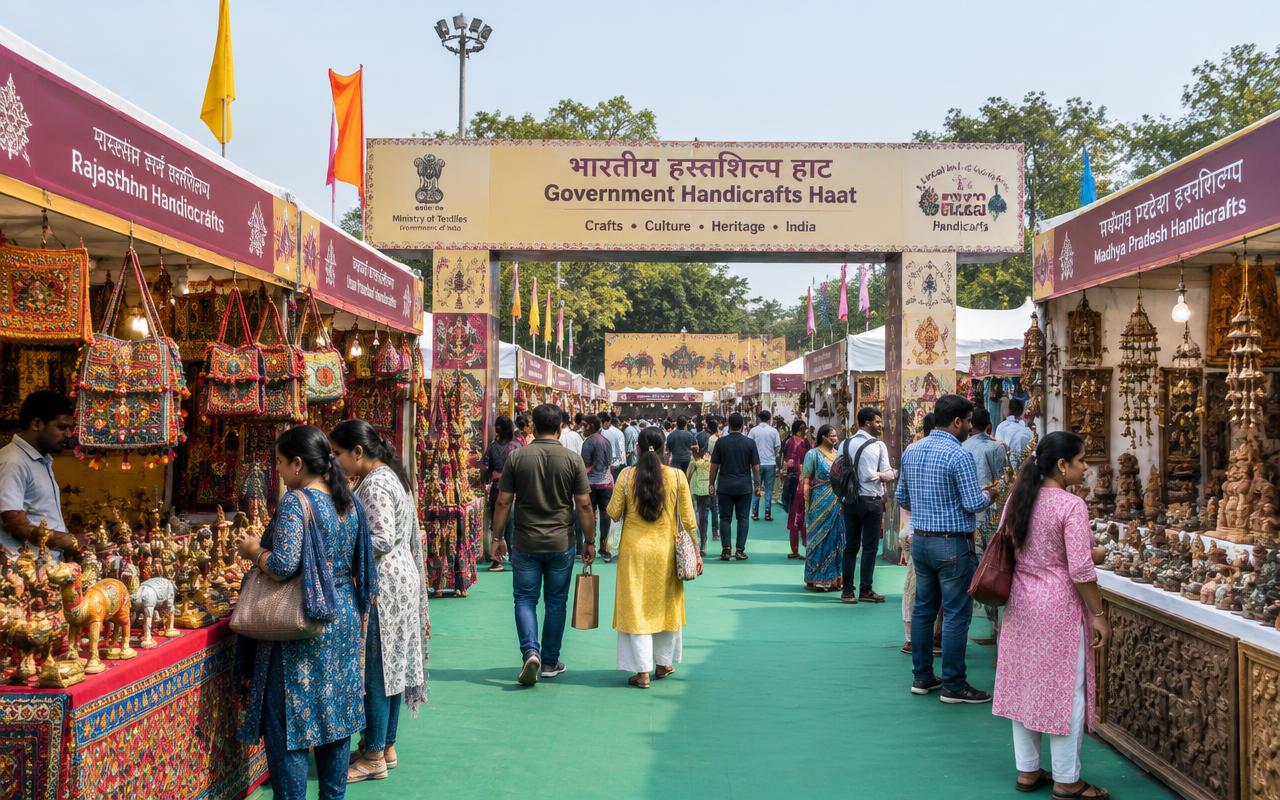
Srinagar venue
Stall fabrication at Government Exhibition Grounds, Srinagar
Government-run haats and exhibition grounds used for handicraft, MSME and state fairs.
13
Srinagar venues covered
2
Named exhibition venues
11
Venue categories
Tier 2
Jammu & Kashmir market
Exhibiting at Government Exhibition Grounds, Srinagar
Government-run haats and exhibition grounds used for handicraft, MSME and state fairs. Our crews work to the organiser's build-up window at this venue, pre-assembling in the workshop so site time goes on assembly rather than fabrication.
A venue imposes a rulebook, and the stall has to be built to it: how high you can go, whether you can hang anything, what you may fix into the floor, how much power you get and which hours you can work. We read that rulebook at design stage, not at build-up.
Of the 13 Srinagar venues we cover, this one occupies the public end of it — the broadest audience, the longest run and the most documentary approvals. Exhibitors tend to compare venues on footfall and cost; builders compare them on access, fixing and power, and on that measure the gap between the extremes of the Srinagar list is very wide.
Srinagar is a growing exhibition market rather than a mature one, and the venues reflect that: 11 venue categories plus 2 named venues. Rooms are shared with other kinds of event, so the paperwork and the hours come from whoever owns the room rather than from an exhibition operator.
Building on a government exhibition ground
Government-run haats and exhibition grounds host handicraft, MSME and state fairs, and the approvals are documentary rather than commercial. Grounds are gated with a controlled vehicle list, passes are issued per crew member so the crew list is final earlier than usual, power is allocated by the department running the fair, and the build and strike hours are set and strictly kept at both ends.
Within Srinagar the specific room still matters: two government exhibition grounds in the same city can differ on clear height, access and power. We confirm those in writing for your edition rather than carrying an assumption from the last build.
What changes at government exhibition grounds
| Build input | At government exhibition grounds |
|---|---|
| Access route & panel sizes | Gated grounds with a controlled vehicle list, then a carry to the stall. Passes are issued per crew member, so the crew list has to be final earlier than at a commercial show. |
| Fixing method | Pegs and ballast on open ground, freestanding on paved areas. Permanent structures, trees and paving are left untouched, which rules out leaning anything on them. |
| Power source | Ground distribution or generator, with an allocation set by the department running the fair. It is usually modest, so LED lighting and low-load fittings are the default rather than a choice. |
| Floor protection | Platform flooring over uneven ground with dust sealing at the edges, and protection boards over paved or heritage surfaces. |
| Build & strike hours | Set by the organising department and strict at both ends. Approvals are documentary, so the paperwork is prepared and lodged well before the build begins. |
| Weather & environment | Open or semi-covered, so rain and dust are planned for. These fairs often run a week or more, which makes durability a bigger issue than finish. |
These six are the ones that change the stand rather than the drawing. Confirm them for your edition with the organiser and we will design to the answers; where an answer is unavailable we design to the conservative assumption and revise once it arrives.
How we build for this kind of venue
- Documentary approvals prepared and submitted well ahead of the build
- Protection boards over paved and heritage surfaces
- A modest power allocation set by the organising department — LED lighting as default
- Signage sized to read across a wide public thoroughfare
- Gated grounds with a controlled vehicle list and passes issued per crew member
- Durable surfaces specified for a run of a week or more
What to ask the organiser about government exhibition grounds
Send the organiser this list before you commission anything. Each answer removes a contingency from the quote, and at government exhibition grounds two or three of them change the structure rather than the finish.
Get these in writing before you brief anyone
- Overnight security on the ground and whether stock may be left on the stand
- Which department issues approvals, in what format, and by what date
- Build and strike hours, and the penalty for overrunning either
- Restrictions near permanent structures, trees and paved or heritage surfaces
- Ground surface at your stand, and whether pegging into it is permitted
- The run length of the fair, since it decides the durability specification
Who exhibits at Srinagar venues, and what that changes
The sector mix in Srinagar is handicrafts, tourism, horticulture, carpets and saffron, and each of those brings its own non-negotiables onto a stand. The table below is what we design against at government exhibition grounds before a single visual is drawn, because most of these requirements are structural or electrical rather than decorative.
Mixed-sector shows are the harder case. Handicrafts and tourism visitors want opposite things from the same footprint, and the resolution is zoning rather than compromise: open display on the aisle face, a closed or semi-closed corner behind it, and storage that keeps the difference invisible.
Srinagar's sector mix and what each needs from a stand
| Sector | What the stand has to do |
|---|---|
| Handicrafts | Handicraft stands sell density. Open shelving, sightlines into the stand rather than a counter across the front, and light aimed at the object instead of the ceiling. |
| Tourism | Tourism stands sell a place. Large imagery high up, a literature counter, seating for an itinerary conversation, and screen content that reads from the aisle without sound. |
| Horticulture | Horticulture stands carry plants and produce, which means water, drainage, a shaded cool zone, and a floor finish that tolerates spill and soil. |
| Carpets | Carpets need hanging height and a rail system rated for roll weight, plus raking light. The stand is really a rack, dressed well enough to stand next to the product. |
| Saffron | Saffron and other high-value produce need secure lit display cases, a sealed sampling point so aroma is controlled, and a seated corner for export buyers. |
The sectors listed are the ones that drive exhibiting activity across Jammu & Kashmir. Where your show draws from more than one of them, the space plan below is where the compromise gets resolved.
Services
What we build at Government Exhibition Grounds, Srinagar
Exhibition Stall Design
Concept-to-3D stall design that stops visitors in the aisle.
Stall Fabrication
In-house carpentry, metal and print for flawless builds.
Custom Exhibition Booths
One-of-a-kind booths built around your brand.
Modular Exhibition Stalls
Reusable, quick-install stalls for frequent exhibitors.
Octanorm & System Stalls
Clean aluminium shell-scheme and system booths.
Double-Decker Stalls
Two-storey stands that double your space.
Pavilion Design
State, industry and association pavilions.
Country Pavilions
National pavilions at Indian and global expos.
Trade Show Booths
High-impact booths for B2B trade shows.
Exhibition Stand Builders
End-to-end stand building with on-site crews.
Event Stage Fabrication
Stages, backdrops and sets for events.
AV & LED Wall Support
LED walls, sound, screens and AV crews.
Stall sizes and lead times for Government Exhibition Grounds, Srinagar
Most stands at a venue like this fall between 9 and 72 sq.m. The table below uses the same formula as our stall planner — storage at 10% of area up to 18 sq.m and 15% above, a meeting corner at 5% unless you are hosting meetings, display taking the remainder — so you can sanity-check a quote against the space you have actually booked.
Lead time is the column exhibitors underestimate. Three weeks is the base for a custom build, four from 24 sq.m and five from 54 sq.m, and those are fabrication weeks after design sign-off rather than from the day you first call. At government exhibition grounds the build-up window itself is rarely the problem; the approval and fabrication time ahead of it usually is.
Space, staffing and lead time by stall size
| Stall size | Footprint | Likely layout | Display | Staff | Visitors at once | Build weeks |
|---|---|---|---|---|---|---|
| 9 sq.m | 3 × 3 m | Inline or corner | 7.6 sq.m | 2 | 3 | 3 |
| 18 sq.m | 3 × 6 m | Inline or corner | 15.3 sq.m | 2 | 6 | 3 |
| 36 sq.m | 6 × 6 m | Corner or three-side open | 28.8 sq.m | 4 | 11 | 4 |
| 54 sq.m | 6 × 9 m | Corner or three-side open | 43.2 sq.m | 6 | 17 | 5 |
| 72 sq.m | 6 × 12 m | Three-side open or island | 57.6 sq.m | 8 | 23 | 5 |
Custom stalls typically run ₹9,000–₹18,000 per sq.m for the build; modular and octanorm construction costs less, and an upgraded shell scheme less again. AV, furniture, flooring, transport and taxes are quoted on separate lines.
Designing a stand that works at Government Exhibition Grounds, Srinagar
A public fair that runs for a week draws a general audience, so durability and clarity beat finesse. Specify surfaces that survive constant handling and signage that works from across a wide thoroughfare.
The stand strategy at a venue like this starts with where visitors come from. Work out which direction the main flow arrives from, put your strongest visual on that face, and keep the entry corner clear so people can step in without committing to a conversation.
The buyers at this venue tend to come from handicrafts, tourism and horticulture. That shapes the brief more than the aesthetics do — a handicrafts visitor is looking for evidence, not atmosphere.
How a build at government exhibition grounds runs
01
Read the venue pack
The job starts with paperwork rather than with a concept. We want the stand plan, the access route, the power allocation and the permitted working hours in writing, and at government exhibition grounds we pay particular attention to the department's approval format and the deadline for crew and vehicle lists.
02
Design to the limits
Design happens against the constraints rather than around them, so durable surfaces for a long run and an LED lighting load that fits a modest allocation is a starting condition here rather than a late revision. What you approve in 3D is therefore something that can actually be built in this room.
03
Build and test in the workshop
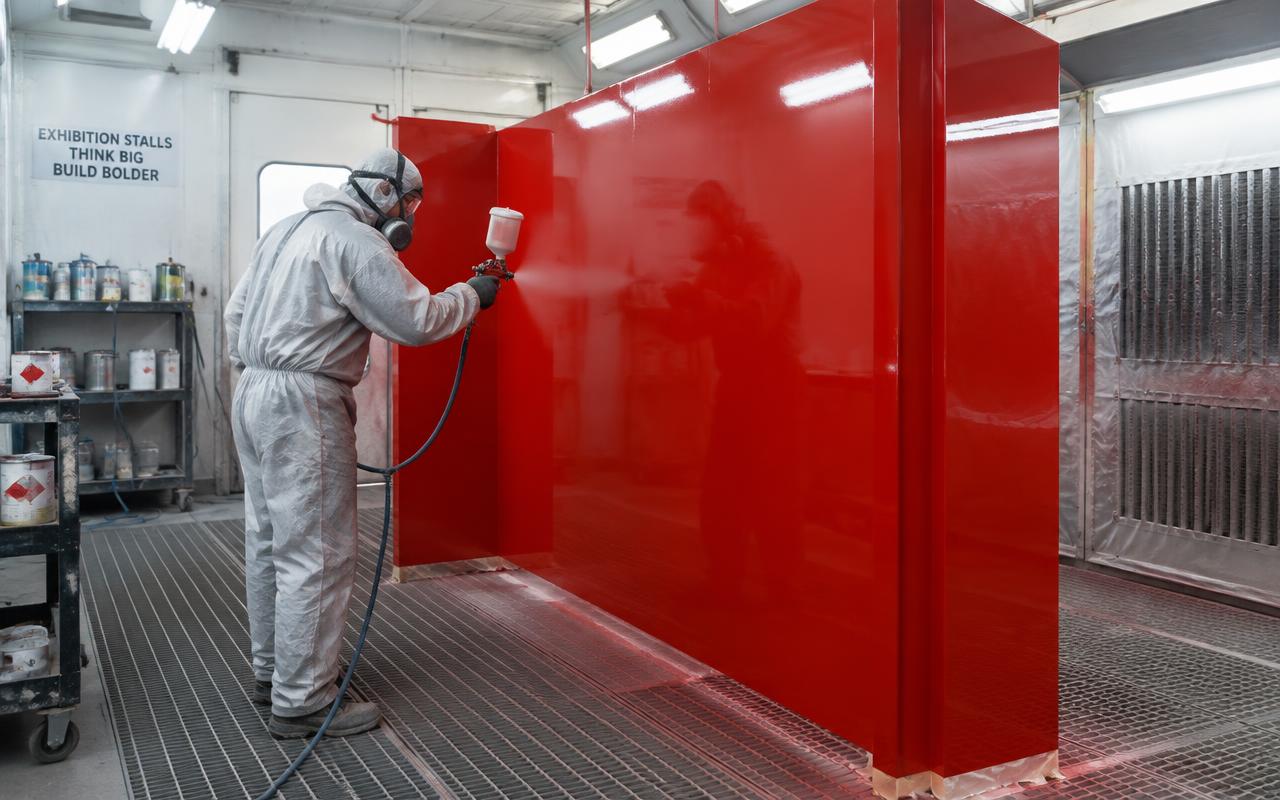
Carpentry, metalwork, spray finishing, large-format print and electrical assembly all happen in-house, and the whole stall is assembled once before it ships. That is what turns a short on-site window into enough time.
04
Install, hand over, strike
On site the work is assembly rather than fabrication, which is the whole point of the previous stage. At government exhibition grounds the install also covers platform flooring over uneven ground and protection boards on paved surfaces, and the same crew comes back to strike the stand and clear the space.
What else is in Srinagar
Srinagar gives you more than one kind of room. Alongside this page we cover 2 named exhibition venues in the city — SKICC – Sher-i-Kashmir International Conference Centre and Exhibition Ground Srinagar. Read by what each one calls itself, that list comprises 1 auditorium, hall or cultural centre and 1 open ground or maidan: 2 different build specifications inside one city.
We also cover 11 venue categories in Srinagar — university & college campuses, industry association halls, stadium & sports complexes, corporate campus event spaces, industrial estate expo grounds, government exhibition grounds, resort & lawn venues, 5-star hotel ballrooms, convention & banquet halls, open exhibition grounds and mall atriums — because most Indian shows outside the top handful of cities happen in a room that was built for something else. Each of those categories has its own access, fixing and power pattern, and each gets its own page.
Named Srinagar venues, read by what each one calls itself
| Venue | Type read from the name | What that implies for a stand |
|---|---|---|
| SKICC – Sher-i-Kashmir International Conference Centre | Auditorium, hall or cultural centre | An auditorium audience is seated for most of the event, which means your stand gets attention in two short windows. |
| Exhibition Ground Srinagar | Open ground or maidan | Open-ground visitors arrive hot, dusty and already tired of walking. |
A venue's name is a strong hint and not a specification. We confirm height, rigging, fixing, power and hours from the organiser's pack for your edition before design sign-off.
Every Srinagar venue we cover
Build-up
Build-up, access and approvals in Srinagar
Logistics in Srinagar come down to three things: how the panels reach the hall, how much power the stand is allocated, and when the organiser lets you work. All three are settled in writing before we cut material.
You can take the whole scope or just part of it. Most exhibitors take design and build together and add AV and furniture to the same quote, because the alternative is reconciling three delivery schedules yourself.
What we handle for you
- Organiser drawings, electrical load details and approvals in the format Srinagar organisers ask for
- Design checked against height, rigging, fixing and fire rules before sign-off
- Pre-assembly and electrical testing in the workshop before dispatch
- Transport, installation and an on-site crew inside the build-up window
- Dismantle and clearing the stand inside the dismantle period
Exhibiting elsewhere in Jammu & Kashmir
Jammu & Kashmir is not a one-city exhibition market. We cover 2 cities in the state — Srinagar and Jammu — with the same workshops, crews and project managers, so a programme that runs across several of them runs on one schedule rather than several.
Government exhibition grounds are not unique to Srinagar either: we cover the same category in all 2 of the Jammu & Kashmir cities on our list, which means the access, fixing and power pattern described above travels with you. A stand built for government exhibition grounds here is usually re-skinnable for the equivalent venue in the next city rather than rebuildable.
Running several cities in a season works best with one structure and several graphic sets. The panels are numbered and stored between shows, each city gets its own print and its own organiser paperwork, and the same project manager carries the job from the first show to the last.
01
Brief
Share stall size, expo and goals. We call within 2 hours.
02
3D Design
Photoreal concepts in 48 hours, revised until perfect.
03
Fabrication
Built and pre-assembled in our own workshops.
04
Install & Show
On-site crew builds, hands over and dismantles.




FAQ
Venue FAQ
Can you build at Government Exhibition Grounds, Srinagar?+
Yes. We build at government exhibition grounds throughout Srinagar, covering design, fabrication, installation and dismantle inside the organiser's window.
What does a stall at Government Exhibition Grounds, Srinagar cost?+
Custom stalls typically range from ₹9,000 to ₹18,000 per sq.m depending on size, finishes and AV; modular and octanorm builds cost less. Share your stand size and show dates for an itemised quote.
Do you handle approvals for Government Exhibition Grounds, Srinagar?+
Yes. We prepare dimensioned drawings, electrical load details and structural documents to the organiser's format, and check the design against the venue's height, rigging and fire rules before fabrication.
Can you provide AV, lighting and furniture at Government Exhibition Grounds, Srinagar?+
Yes — LED walls, screens, lighting, furniture, flooring and carpeting can be bundled with the stall build on a single quote.
What are the build-up timings at Government Exhibition Grounds, Srinagar?+
Build-up windows are set by the organiser for each show rather than by the venue alone, so we confirm them in writing for your edition and plan the build — including night shifts if needed — around them.
How early should I book for a show at Government Exhibition Grounds, Srinagar?+
Four to six weeks ahead for a custom stall and eight or more for a double-decker or pavilion. Urgent builds in seven to ten days are possible with a simplified design.
Is power limited at a state fair ground?+
Usually, yes. The allocation per stall is set by the organising department and tends to be modest, so lighting goes to LED, loads are declared honestly and anything heavy is agreed in advance rather than plugged in on the day.
How does a long fair run change the build?+
It moves the specification from finish to durability. A fair running a week or more means surfaces that take constant handling, graphics that do not scuff at hand height, stock storage sized for the whole run, and a stall that still looks maintained on the last day.
Do you design differently for handicrafts exhibitors here?+
Yes. Srinagar's show calendar is driven by handicrafts, tourism, horticulture, carpets and saffron, and the sector decides the fundamentals — how much product has to be on open display, how private the meeting space needs to be, whether the floor has to carry load and whether water, drainage or three-phase power are required. We brief against the sector before the identity.
Can the same stand be used at another Jammu & Kashmir venue?+
Usually, if it is built for it. We cover 2 Jammu & Kashmir cities including Srinagar and Jammu, and a frame-and-skin stand can be stored, re-skinned with new graphics and rebuilt at the equivalent venue elsewhere in the state. Say so at design stage, because a reusable stand is detailed differently.
What is the biggest risk at government exhibition grounds?+
Discovering a constraint after fabrication. Approvals here are documentary and carry deadlines, and a stall whose paperwork is late does not get a pass onto the ground. That is why we ask for the access route, the fixing rules, the power allocation and the build-up window in writing before anything is cut, rather than treating any of them as a site problem.
More in Srinagar
Other Jammu & Kashmir cities we cover
Exhibiting soon? Let's build your stall.