Guides
Exhibition know-how
Practical, long-form guides for exhibitors and event teams.
These 10 guides cover the questions exhibitors ask before they commit a budget: what a stall costs per square metre, whether a shell scheme or a custom build is the right route, when a two-storey stand earns its approvals, how to specify an LED wall, and what has to happen in each of the sixty days before a show opens.
Each one is written from the build side rather than the marketing side, so the numbers are the same ones we quote: ₹9,000 to ₹18,000 per sq.m for custom design and fabrication, 3 weeks of build time from sign-off, four from 24 sq.m and five from 54 sq.m. There are no client names, review scores or footfall statistics here, because an article that invents those is no help when you are planning a real participation.
If you want the same material organised by service rather than by subject, the resource library holds 344 articles — a cost guide, buyer's guide, checklist, timeline and question list for every service we publish.

How much does an exhibition stall cost in India?
What the ₹9,000–₹18,000 per sq.m band actually covers, how build cost moves with stall size, which lines sit outside the fabrication rate, and how to read a quote line by line.
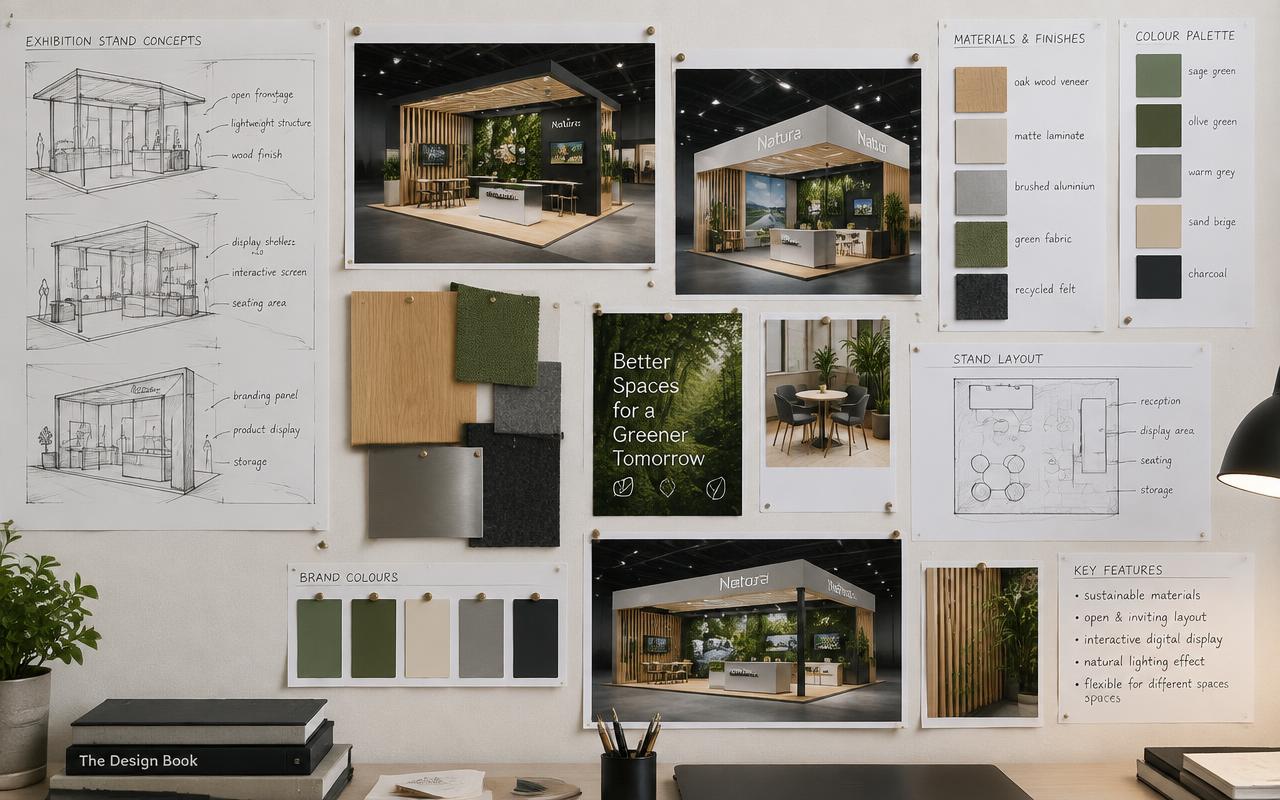
25 exhibition stall design ideas that pull crowds
Twenty-five layout, lighting, graphic and engagement ideas that make a stand visible from across the hall and give visitors a reason to stop walking.
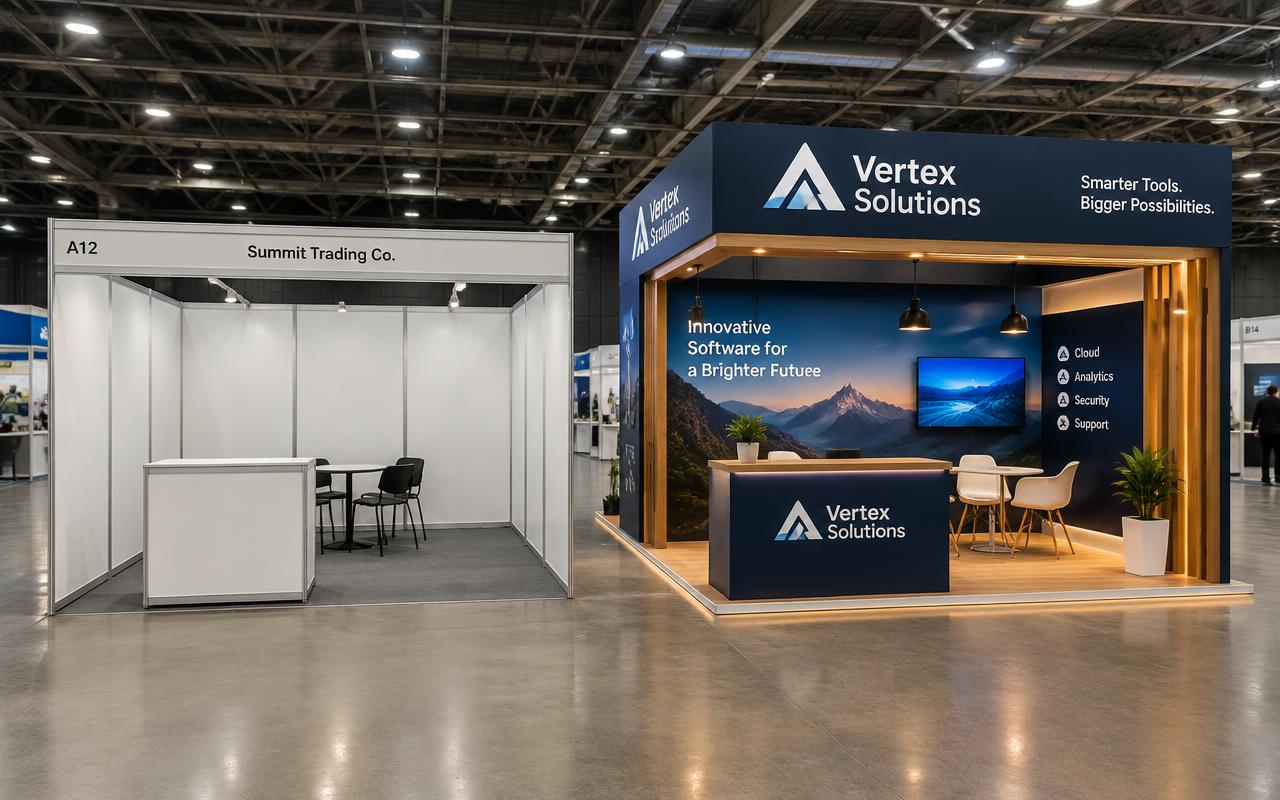
Shell scheme vs custom stall: which should you choose?
What you can and cannot change in a shell scheme, where custom fabrication earns its money, and a decision framework based on show count rather than budget.

Double-decker stalls: the complete guide
When a two-storey stand is worth the approvals, how the structure and the staircase eat into your plan, what organisers need in writing, and how to plan the build window.
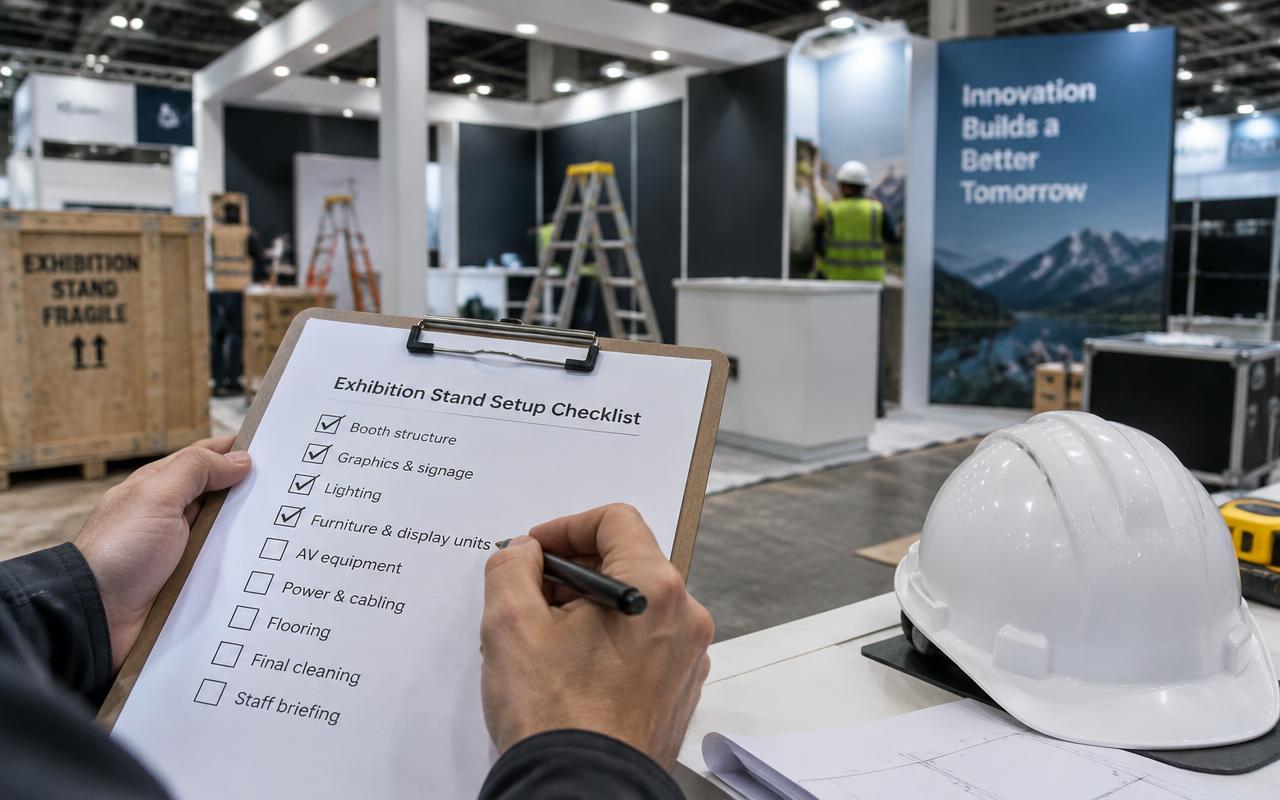
The 60-day exhibition checklist
A week-by-week plan from sixty days out to the post-show follow-up, with the organiser deadlines, build-up tasks and handover checks that exhibitors most often miss.

Major trade shows and expos in India
How the Indian exhibition calendar is organised by city, venue and sector, what each major venue is like to build in, and how to plan a show programme across more than one city.
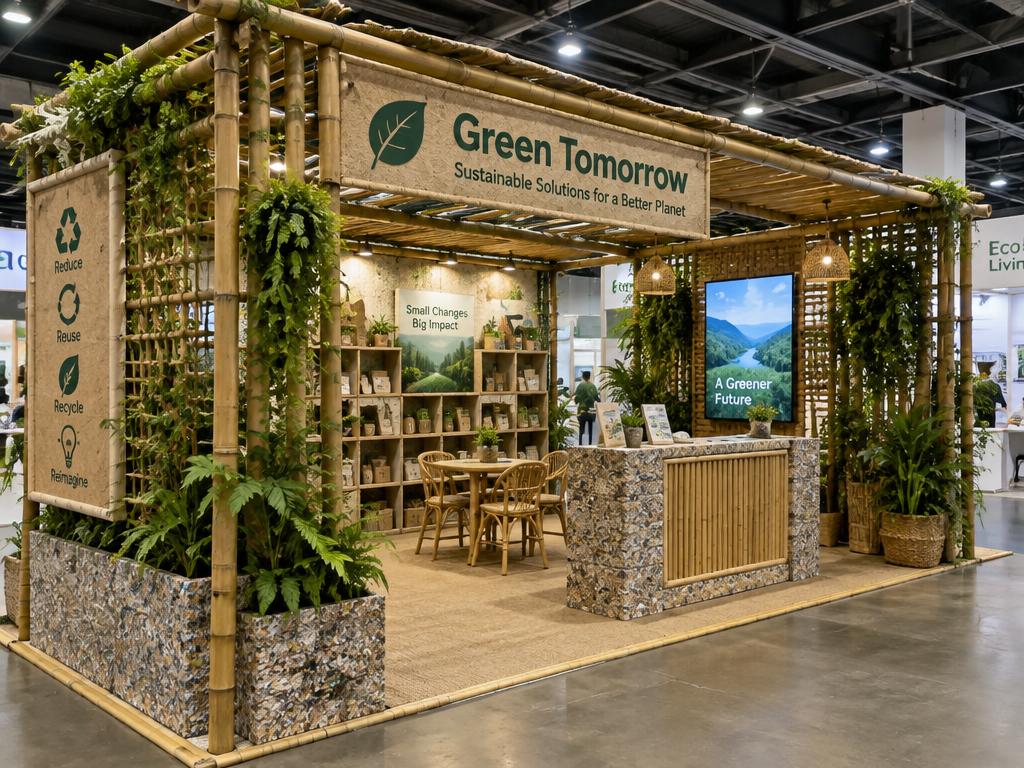
Building eco-friendly exhibition stalls
Which materials genuinely reduce show waste, why reuse matters more than material choice, and how to design a stand that comes apart cleanly and goes back up at the next show.

Using LED walls at exhibitions
Choosing pixel pitch for a stand, sizing a wall so content is legible from the aisle, what the power and structure demand, and how to brief content that works in a loud hall.

How to choose an exhibition stall fabricator
How to separate fabricators who build in-house from brokers, what a comparable quote looks like, and the questions that close the gaps where projects usually go wrong.

Pavilion design tips for states and associations
How to make a multi-exhibitor pavilion read as one brand, allocate booth sizes fairly, plan shared spaces and run the approval process across many stakeholders.
What each guide settles
A guide is worth reading when it ends an argument rather than opening one. This is the single decision each of these pages is written to close, so you can pick the one that matches the question in front of you instead of reading all 10.
One decision per guide
| Guide | The decision it closes |
|---|---|
| How much does an exhibition stall cost in India? | What the per sq.m band covers, which lines sit outside it, and how to read a quote line by line |
| 25 exhibition stall design ideas that pull crowds | Layout, lighting, graphic and engagement ideas that make a stand visible from across the hall |
| Shell scheme vs custom stall: which should you choose? | Which route suits your show count and area — and what you cannot change inside a shell scheme |
| Double-decker stalls: the complete guide | Whether a two-storey stand earns its approvals, and what the structure and staircase cost you in floor |
| The 60-day exhibition checklist | A week-by-week plan from sixty days out, with the organiser deadlines exhibitors most often miss |
| Major trade shows and expos in India | How the Indian show calendar is organised by city, venue and sector, and how to plan across more than one |
| Building eco-friendly exhibition stalls | Which materials genuinely reduce show waste, and why reuse matters more than material choice |
| Using LED walls at exhibitions | Pixel pitch, wall size, power and structure — and how to brief content that survives a loud hall |
| How to choose an exhibition stall fabricator | How to tell an in-house builder from a broker, and the questions that close the usual gaps |
| Pavilion design tips for states and associations | Making a multi-exhibitor pavilion read as one brand, from booth allocation to shared spaces |
Every figure in every guide traces back to the same rate card and the same lead-time formula our quotes use, so two guides never contradict each other.
Where to start
Most exhibitors arrive with one of four problems, and each has an obvious first read. Find yours below rather than starting at the top of the grid.
01
You have a number but no scope
Start with the cost guide. It explains what the per square metre band includes, what sits outside it, and how a quote should be itemised — which is the difference between a figure you can defend internally and a figure you hope is right.
02
You have a scope but no route
Read the shell scheme versus custom comparison, then the fabricator guide. The first settles how much structure you actually need; the second settles who should build it and what to ask before you commit.
03
You have a date and it is close
Go straight to the sixty-day checklist and work backwards from your show date. It lists the organiser deadlines, drawing submissions and artwork locks in the order they block each other, so you can see immediately what is already late.
04
You know what you want it to look like
The design ideas and LED wall guides are the ones to read with your agency in the room. Both are written around constraints — height rules, sanctioned load, legibility from the aisle — so the ideas that survive the hall are the ones you end up discussing.
How the guides relate to the resource library
The guides are organised by subject and written to be read end to end. The resource library is organised by service and written to be consulted: 344 articles across 12 categories, generated from the same templates for each of the 31 services we publish, so every service has its own cost guide, buyer's guide, checklist, timeline, comparison and question list rather than sharing a generic one.
Use the guides to form a view and the library to execute it. A guide will tell you that a double-decker needs structural approval and two extra weeks; the corresponding library articles give you the checklist to run, the questions to ask the builder and the brief template to send. Neither duplicates the other, and both quote the same figures.
The library also carries the material that is specific rather than general — the cost of a single service at a single size, the questions that only apply to pavilions or to projection mapping — which is the detail a hub page of 10 articles cannot hold without becoming unreadable.
What each library category is for
| Category | Articles | What it is for |
|---|---|---|
| Pillar Guides | 3 | The long reference piece for a whole subject, written to be read once and returned to |
| Cost Guides | 31 | What a service costs, what drives the figure up or down, and worked arithmetic for common sizes |
| Buyer's Guides | 31 | How to specify and buy the service without leaving a gap a change order can live in |
| Comparisons | 31 | Two routes set against each other on cost, lead time, form and reuse, with a decision rule |
| Checklists | 31 | The items to confirm, in the order they block each other, from brief to dismantle |
| Design Ideas | 31 | Layout and visual approaches that suit the service, with the constraint each one carries |
| Planning & Timelines | 31 | What happens in which week, what starts the clock, and what sits on the critical path |
| Leads & ROI | 31 | How to capture and measure what the stand produced, and what to compare it against |
| Mistakes to Avoid | 31 | The failures we actually see on site, and what they cost when nobody catches them early |
| Questions to Ask | 31 | The questions that separate a buildable quote from an optimistic one, with the answers to expect |
| How It Works | 31 | The mechanics of the service, stage by stage, including what we need from you at each one |
| Templates | 31 | A brief or specification you can fill in and send to any supplier, not only to us |
Counts are derived from the library itself, so they move when articles are added rather than being maintained by hand.
What the guides deliberately do not do
They do not publish footfall figures, visitor statistics, client names or show dates. Footfall varies by hall, by day and by sector, and a number invented for an article is worse than no number when you are deciding whether a show is worth the space rent — so we tell you to ask the organiser for their audited figures instead.
Show dates move, and the organiser is the only authority on them. The same applies to build-up windows, sanctioned power, appointed-contractor rules and anything else printed in an exhibitor manual: we explain what to look for and why it matters, and we point you at the manual rather than quoting a figure that might be a year out of date.
Where else to look on the site
Beyond the guides and the library, the site publishes planning tools and reference pages: a planner that applies our space-plan and lead-time formula to your stall size, cost pages broken down size by size, and venue and city pages covering 1,461 venues across 119 cities.
Exhibiting soon? Let's build your stall.