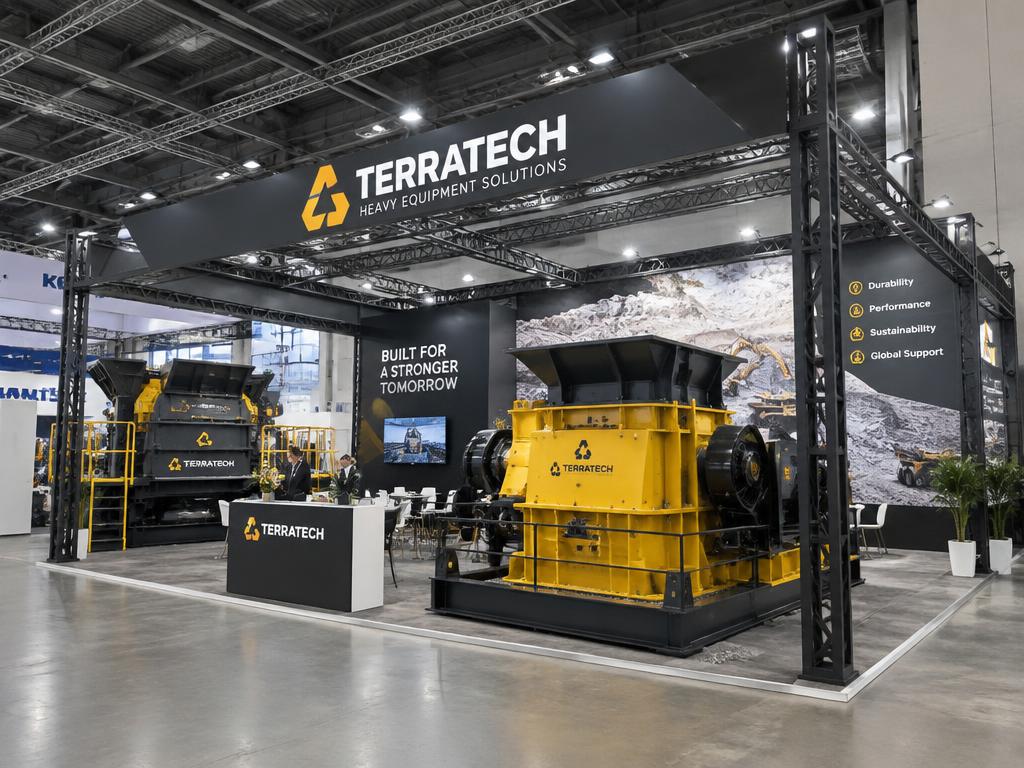
Industry
Engineering & Machinery exhibition stalls
Heavy-load floors and steel structures for machine tool shows.
What an engineering & machinery stand has to do
Machine tool and engineering shows are the most physically demanding builds in the calendar. Machines weighing several tonnes are craned or rolled into position, often before the stand is complete, and the floor under them has to be engineered rather than decorated.
The stand then has to work around a running machine: swarf, noise, guarding, power at industrial ratings and a safe viewing distance for visitors watching a live cut.
Why engineering & machinery stands are harder than they look
Every sector has a handful of constraints that decide the design before anyone discusses how it should look. For engineering & machinery exhibitors these are the ones that matter, and they are worth settling in the brief rather than in the workshop.
- Point loads of several tonnes and the floor build-up under them
- Crane and forklift access sequenced before stand completion
- Industrial three-phase power and compressed air
- Guarding, swarf containment and visitor safety around live machines
- Noise from running equipment competing with conversation
What we build into an engineering & machinery stand
These are the features engineering & machinery buyers expect to find, drawn from what the sector's shows actually demand rather than from a generic stand specification.
- Load-spreading floor build-up under every machine position
- Three-phase power and, where needed, compressed air to each machine
- Guarding and a marked safe viewing line for live demonstrations
- Specification boards per machine at readable height
- A quieter meeting area away from running equipment
- Overhead branding, since floor level is occupied by machinery
How we divide the floor for engineering & machinery
Floor area is the scarcest thing on any stand, and the split between display, demonstration, meeting and storage is a sector decision long before it is an aesthetic one. For engineering & machinery the usual division looks like this.
Engineering & Machinery stand zones
| Zone | What it is for |
|---|---|
| Machine floor | Load-rated positions with access, power and guarding |
| Viewing line | Marked safe distance from which visitors watch live operation |
| Technical meeting area | Away from noise, for specification and commercial discussion |
| Overhead branding | Hanging banners and tall elements, because the floor is full |
Space, staffing and lead time by stall size
| Stall size | Footprint | Likely layout | Display | Staff | Build weeks |
|---|---|---|---|---|---|
| 18 sq.m | 3 × 6 m | Inline or corner | 15.3 sq.m | 2 | 3 |
| 36 sq.m | 6 × 6 m | Corner or three-side open | 28.8 sq.m | 4 | 4 |
| 54 sq.m | 6 × 9 m | Corner or three-side open | 43.2 sq.m | 6 | 5 |
| 72 sq.m | 6 × 12 m | Three-side open or island | 57.6 sq.m | 8 | 5 |
Same formula as our stall planner: storage 10% of area up to 18 sq.m and 15% above, meeting space 5% unless you are hosting meetings, display takes the remainder, staff = area ÷ 9.
Materials and finishes we specify
Material choice on an engineering & machinery stand is driven by what the stand has to survive and what the product has to look like next to it.
- Steel sub-structure and load-spreading platform decking
- Industrial-grade flooring that tolerates swarf and coolant
- Powder-coated steel and perforated metal for guarding and screens
- Heavy-duty truss for hanging banners where rigging is allowed
- High-output lighting to read dark machine surfaces
Shows
Engineering & Machinery shows we build for
We build for IMTEX, Engimach and Excon among others. Editions, dates and halls change year to year, so confirm the current details with the organiser before planning around them.
01
Brief
Share stall size, expo and goals. We call within 2 hours.
02
3D Design
Photoreal concepts in 48 hours, revised until perfect.
03
Fabrication
Built and pre-assembled in our own workshops.
04
Install & Show
On-site crew builds, hands over and dismantles.





FAQ
Engineering & Machinery stalls: FAQ
What makes a good engineering & machinery exhibition stall?+
Load-spreading floor build-up under every machine position, Three-phase power and, where needed, compressed air to each machine, Guarding and a marked safe viewing line for live demonstrations — in that order of priority. Engineering & Machinery stands are judged on technical enquiries and quotations, so the priority is getting a specifying engineer in front of a running machine.
How much does an engineering & machinery stall cost?+
Custom stalls typically run ₹9,000–₹18,000 per sq.m for the build, depending on finishes, lighting and AV. Sector-specific requirements — load-rated platforms, closed meeting rooms, refrigeration, secure showcases — are quoted on their own lines.
How early should we brief for an engineering & machinery show?+
Four to six weeks for a standard custom stand, and eight weeks or more where the stand needs structural engineering, closed meeting rooms, services such as water and drainage, or organiser approvals beyond the usual set.
Do you understand our sector's compliance requirements?+
We build to the specification your regulatory, security or technical team approves, and we raise the organiser and venue requirements that affect the layout early. We do not advise on the content of regulated claims.
Can you deliver engineering & machinery stalls across several cities?+
Yes. We cover 119 cities with the same workshops and project managers, and a modular build can travel between shows so the cost per edition falls after the first build.
Is 3D design included?+
Yes, free with every confirmed fabrication order and revised until you approve it.
Services for this industry
Engineering & Machinery stalls in key cities
Popular builds for engineering & machinery
Other industries
Exhibiting soon? Let's build your stall.